Scandi Minimal vs. Warm Modern: Which Home Aesthetic Is Right for You?
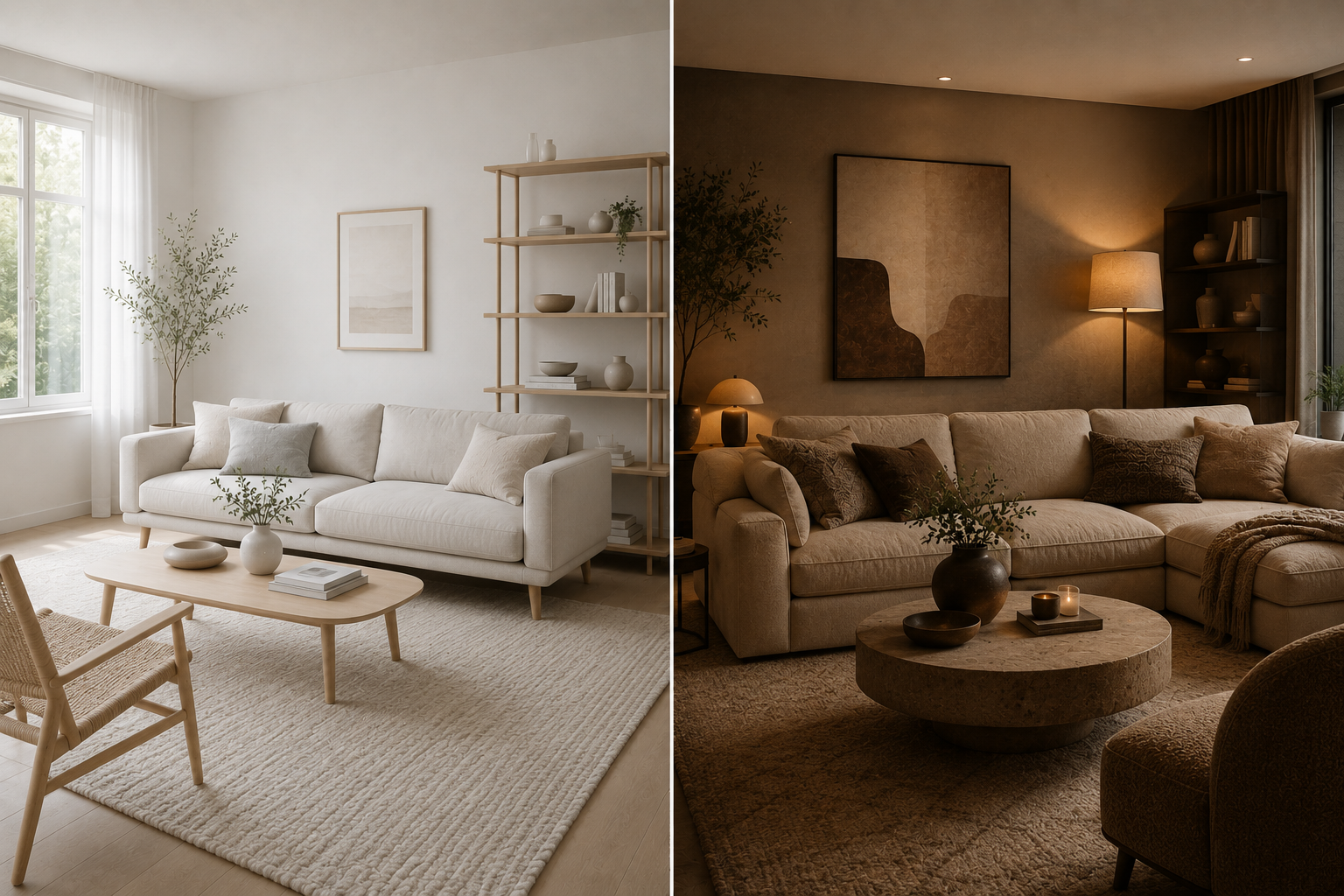
Minimalist interiors are no longer limited to white walls, bare surfaces, and perfectly edited rooms. Today’s most loved home aesthetics make space for comfort, texture, personality, and everyday life. Two styles often compared are Scandi minimal and warm modern. Both are clean, functional, and calming, but they create very different moods.
Scandi minimal feels airy, light, and quietly disciplined. Warm modern feels grounded, layered, and inviting. My understanding of these styles has also been shaped by travel in a quiet, everyday way. Seeing how different homes, cafés, hotels, and public spaces use light, texture, and colour has made me notice how personal the idea of “comfort” can be. If you are planning a refresh, furnishing a new home, or simply trying to define your interior style, understanding the difference can help you make more confident design choices.
What Is Scandi Minimal?
Scandi minimal is rooted in Scandinavian design principles: simplicity, practicality, natural light, and a close relationship with nature. The look is often bright and restrained, with pale woods, soft whites, functional furniture, and uncluttered surfaces. Its strength lies in making a home feel open, calm, and easy to live in.
The mood is fresh rather than dramatic. Think light oak floors, linen curtains, slim-profile furniture, simple ceramics, woven baskets, and a few thoughtful accents. Every item should feel useful, honest, and intentionally placed.
What Is Warm Modern?
Warm modern takes the clean lines of contemporary design and softens them with earthy colours, tactile materials, rounded forms, and layered lighting. It is still edited and uncluttered, but it is less strict than classic minimalism. Instead of asking what can be removed, warm modern asks what deserves to stay.
The result is a home that feels sophisticated yet comfortable. Expect walnut or oak furniture, creamy walls, boucle or linen upholstery, travertine, ceramic decor, soft curves, bronze or black accents, and a palette of beige, brown, clay, olive, and muted gold.
Scandi Minimal vs. Warm Modern: The Key Differences
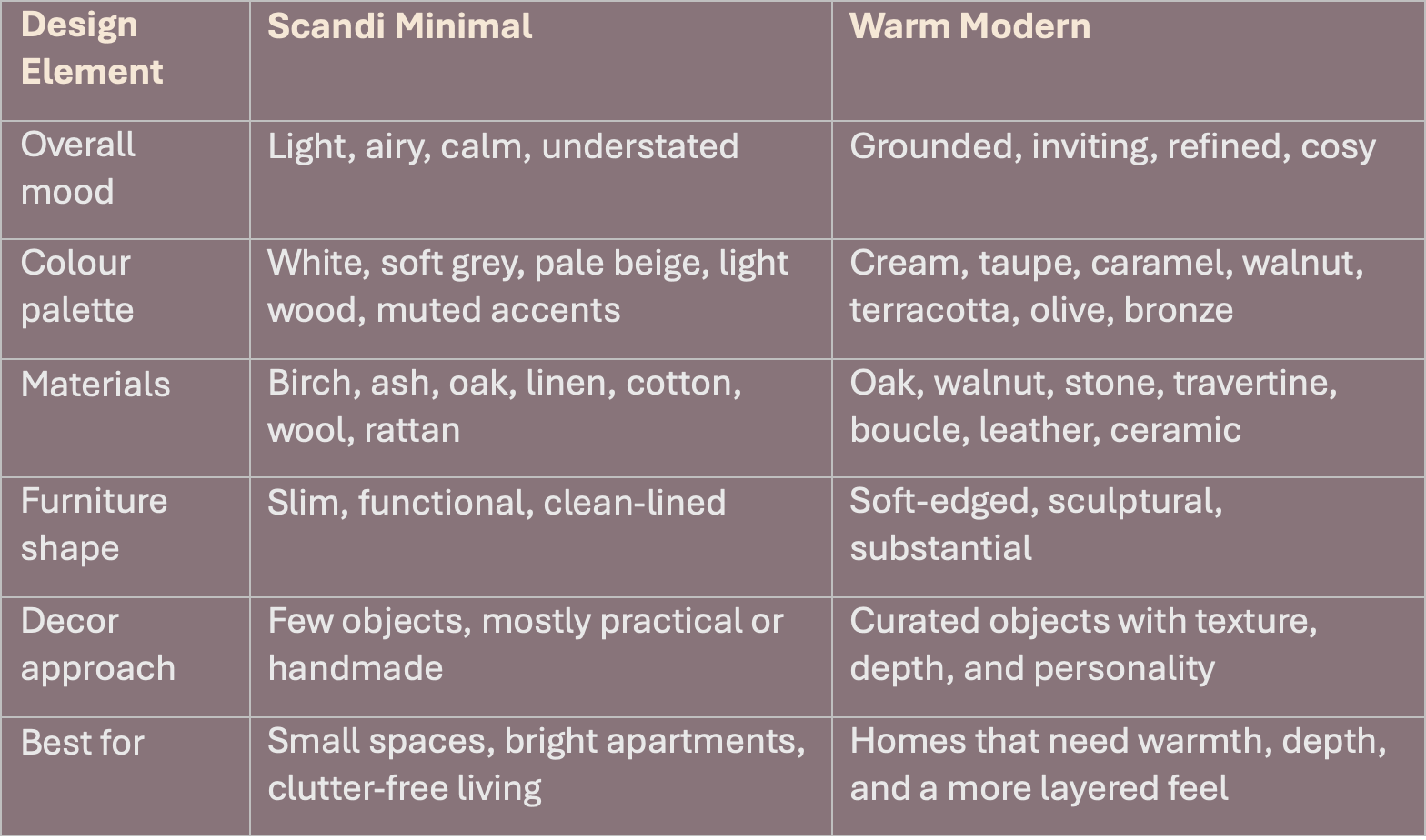
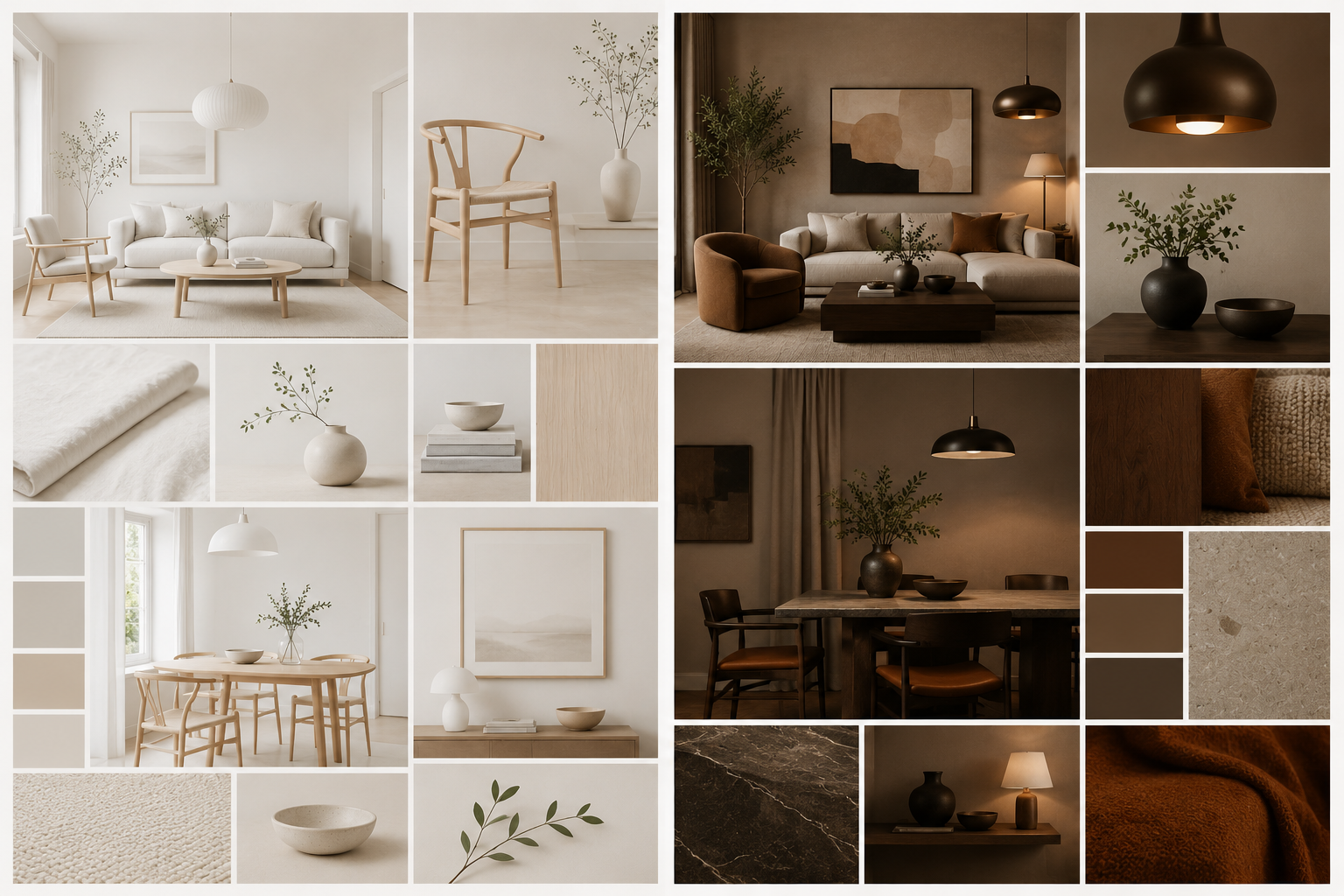
Colour: Cool Calm vs. Earthy Comfort
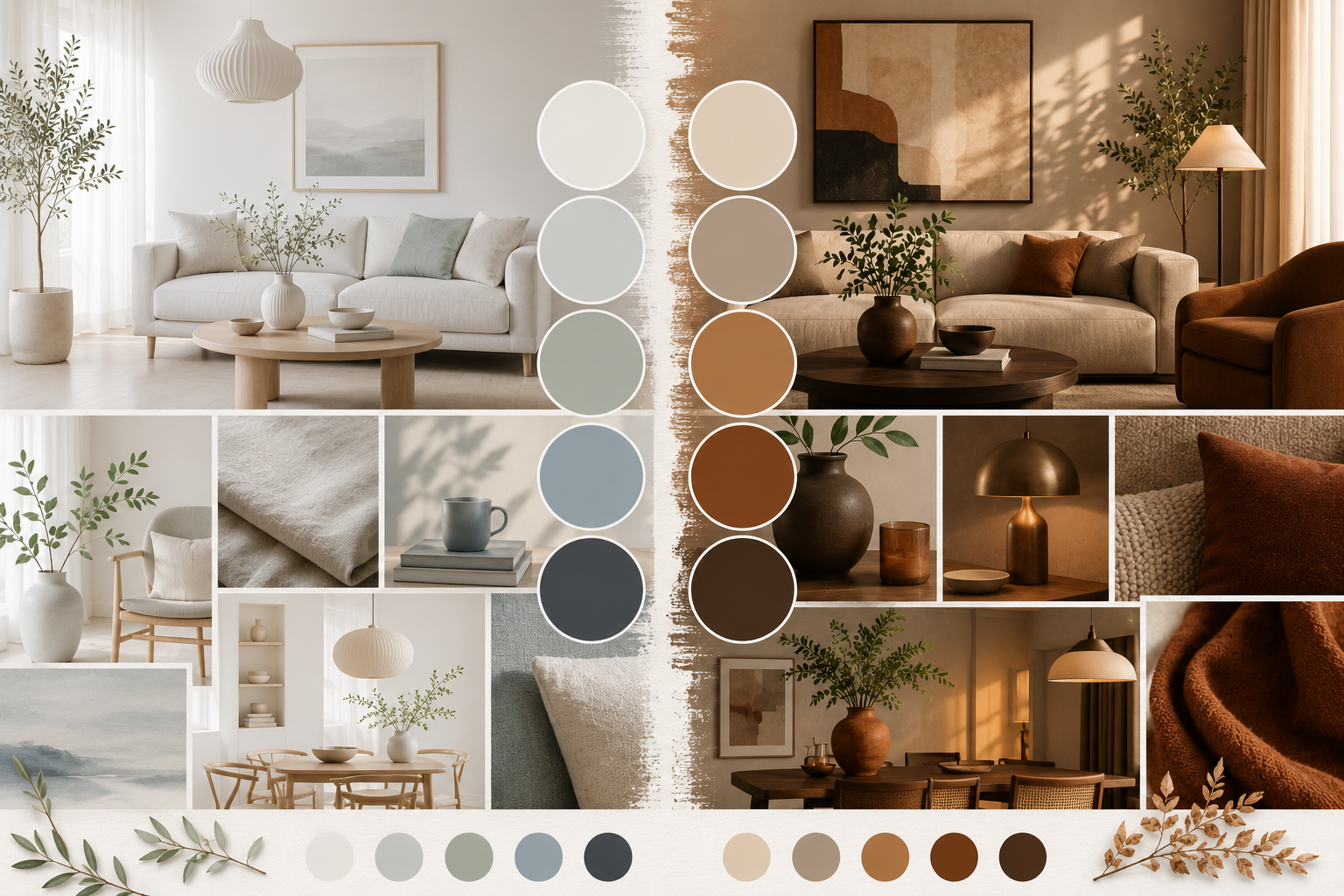
Colour is one of the easiest ways to tell the two aesthetics apart. Scandi minimal usually starts with a bright base: white walls, pale timber, light grey upholstery, and quiet accents like sage, soft blue, or charcoal. This palette reflects light beautifully and works especially well in compact rooms or homes with limited natural brightness.
Warm modern, on the other hand, prefers depth. Walls may be cream, mushroom, sand, or warm greige. Furniture often introduces richer tones such as walnut, cognac, rust, or chocolate brown. The palette still feels neutral, but it has more visual weight and emotional warmth.
Materials and Texture: Natural Simplicity vs. Tactile Layers
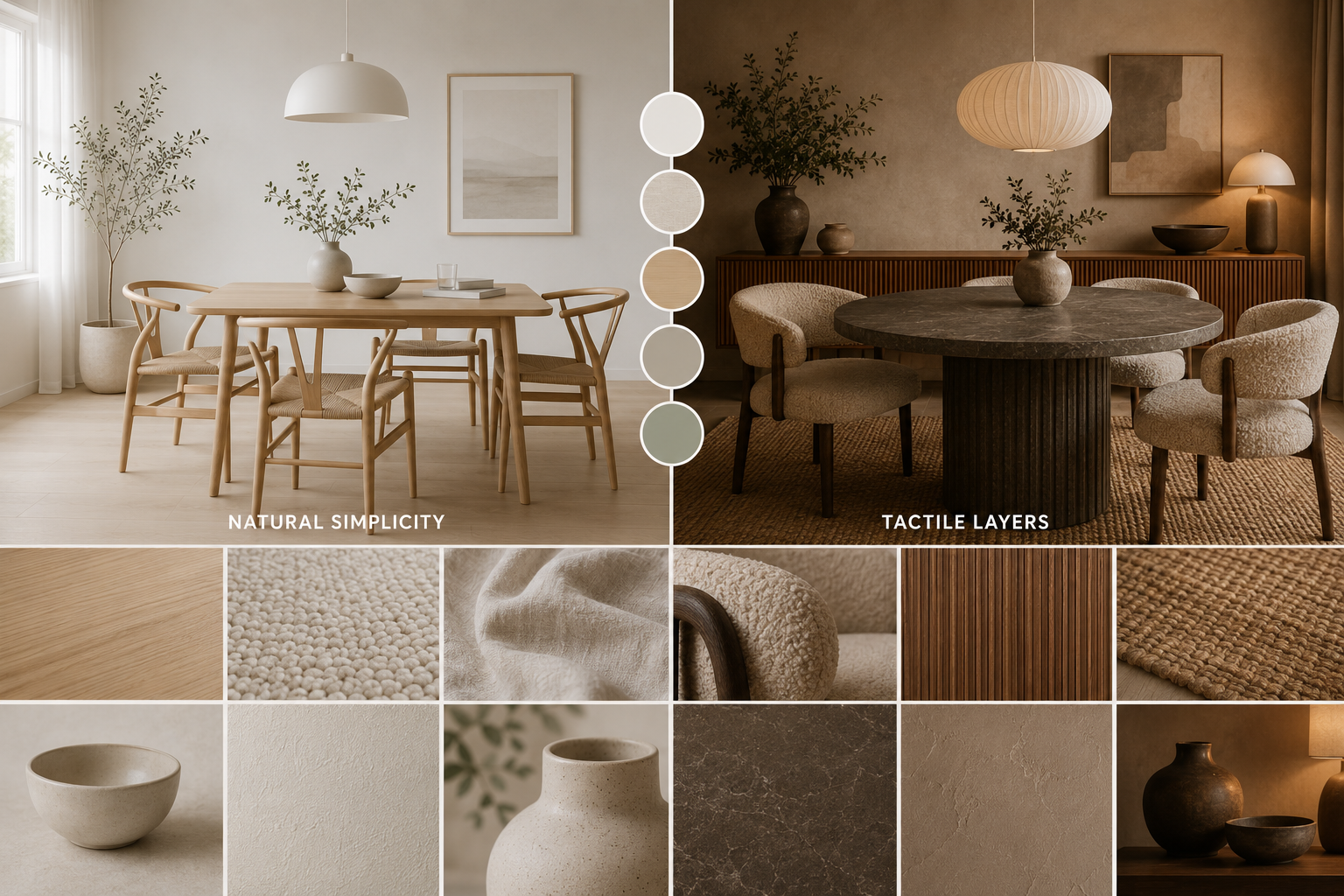
Scandi minimal relies on honest, natural materials used sparingly. A light oak table, a wool rug, a linen shade, or a handmade ceramic bowl may be enough to give a room warmth without making it feel busy. Texture is present, but it is subtle.
Warm modern is more tactile. It welcomes layered textures: a boucle chair beside a stone coffee table, a ribbed wood console, a woven rug, matte plaster walls, and soft lighting. These details create depth without relying on clutter.
Furniture: Light and Functional vs. Soft and Sculptural
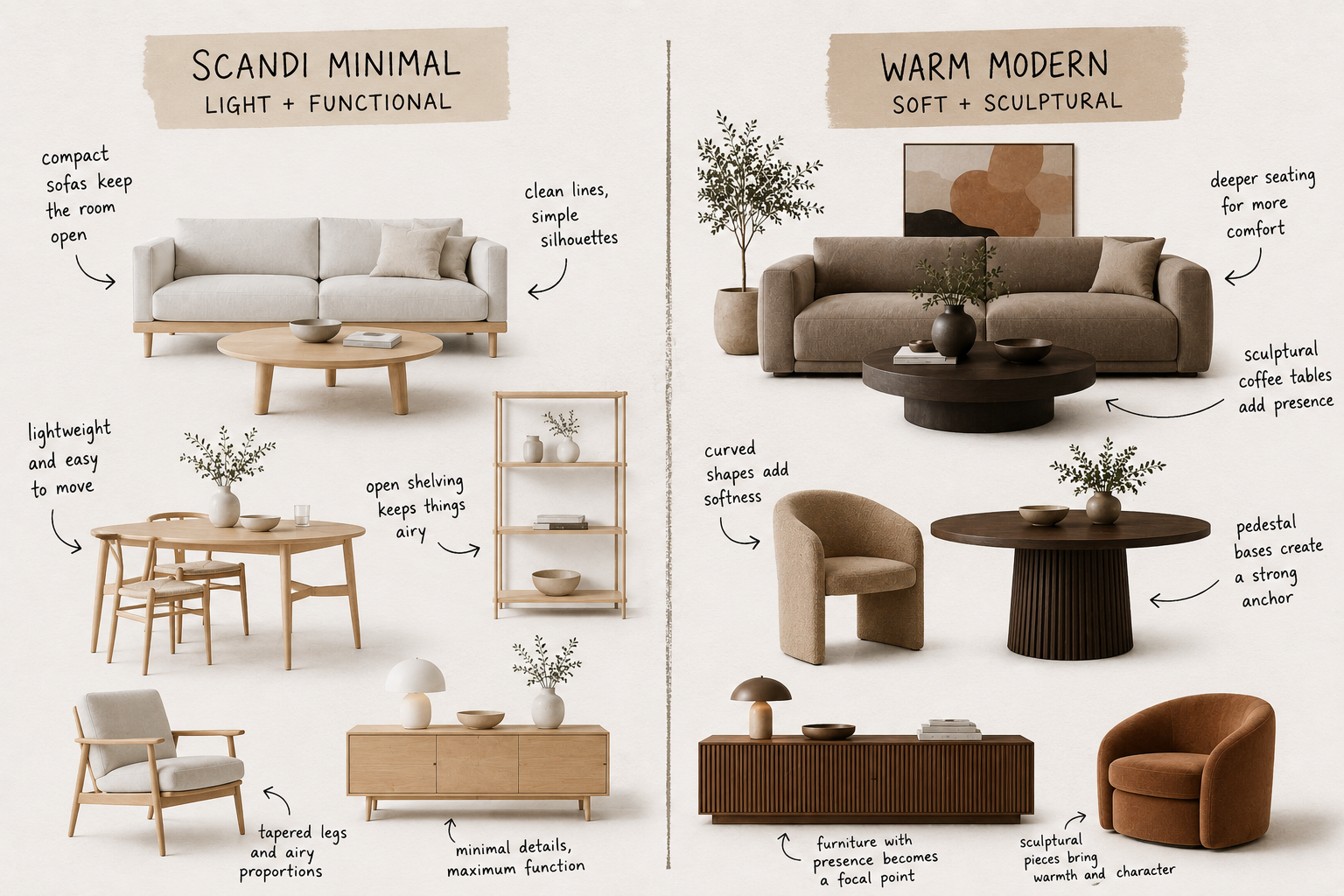
In a Scandi minimal home, furniture is typically practical, lightweight, and easy to move around. The silhouettes are simple: tapered legs, open shelving, compact sofas, and dining chairs that balance comfort with restraint. The goal is to keep the room visually breathable.
Warm modern furniture often has more presence. Sofas are deeper, chairs may be curved, tables may have pedestal bases, and sideboards may feel architectural. These pieces become anchors in the room, giving the space a polished and intentional look.
Lighting: Bright Daylight vs. Layered Glow
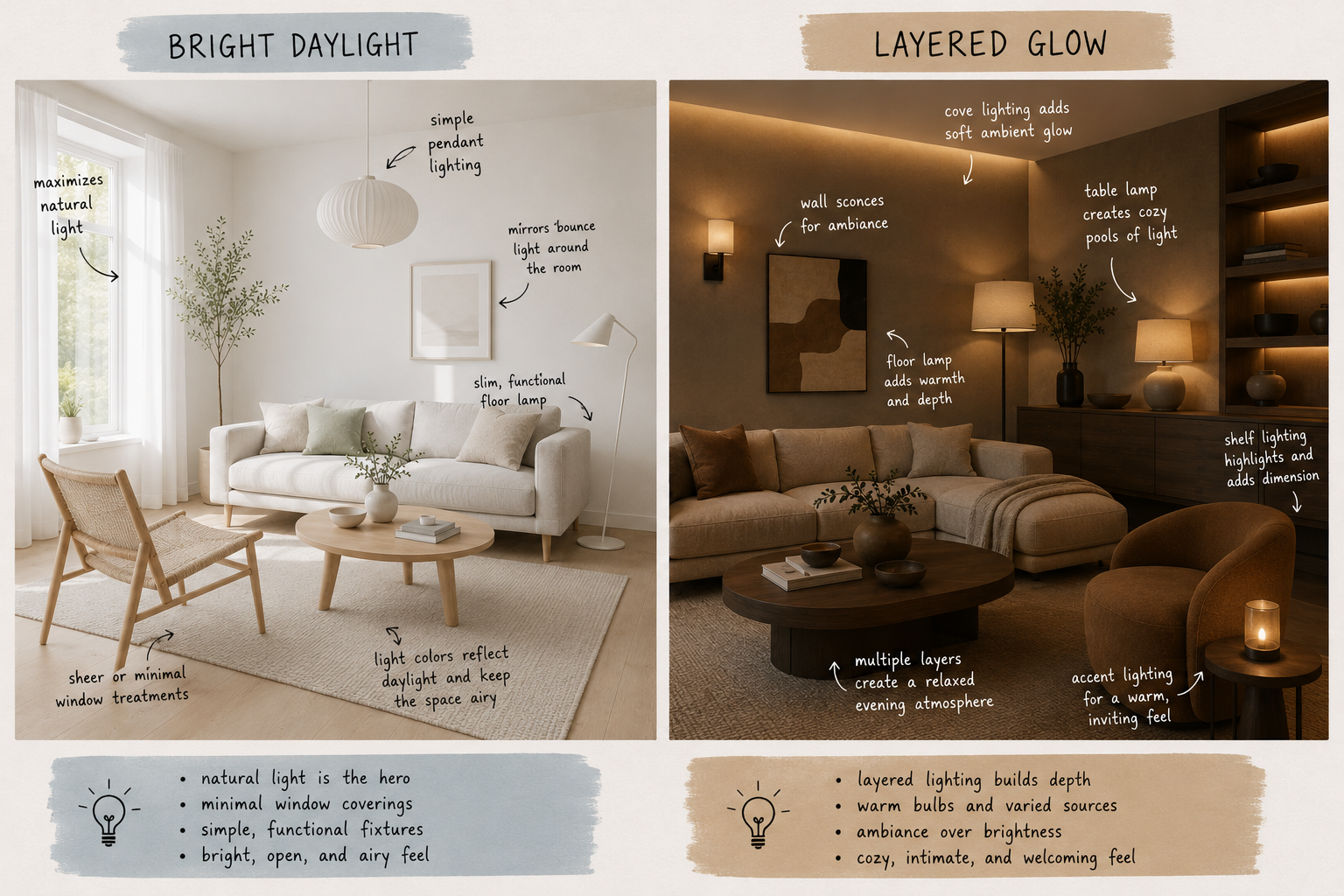
Scandi minimal design celebrates natural light. Window treatments are usually sheer or minimal, and mirrors are often used to bounce daylight around the room. Artificial lighting tends to be simple: a paper pendant, a slim floor lamp, or a functional task light.
Warm modern interiors depend heavily on layered lighting. Instead of one overhead source, the room is built through table lamps, wall sconces, floor lamps, cove lighting, and warm bulbs. This creates a relaxed evening atmosphere and makes the home feel more intimate.
How to Choose Between the Two
Choose Scandi minimal if you want your home to feel brighter, simpler, and more open. It is ideal if you dislike visual clutter, live in a smaller space, or prefer furniture that feels light and practical.
Choose warm modern if you want a home that feels cosy but still elevated. It suits larger rooms, open-plan layouts, and anyone who loves neutral interiors but wants more richness, softness, and personality.
You do not have to pick one style exclusively. In fact, the most liveable homes often blend both: use Scandi minimal as the foundation and warm modern as the layer that adds comfort. Start with clean lines and light walls, then introduce warmer wood, textured textiles, soft lighting, and a few sculptural pieces.
My Travel-Inspired Take
Travel has made me pay attention to interiors in a more observant way. In places like the Netherlands and Germany, I often noticed spaces that felt calm, practical, and beautifully restrained, bright rooms, clean lines, natural materials, and a sense that every object had a purpose. Those details reminded me of Scandi minimalism: simple, useful, and quietly elegant.
In places such as Brazil, Vietnam, and Sri Lanka, I found myself noticing a different kind of beauty: warmth, colour, handmade textures, layered spaces, and rooms that felt lived-in rather than overly styled. These places made me appreciate how warmth can come from small details, a woven chair, a clay pot, patterned fabric, soft lighting, or a wall colour that feels close to the earth.
That is why I do not see Scandi minimal and warm modern as opposites. I like the clarity and discipline of minimal spaces, but I also believe a home should carry warmth, memory, and a few details that feel personal. For me, the most beautiful interiors borrow from both worlds: a calm base, thoughtful furniture, warm light, natural textures, and objects that feel collected rather than displayed.
Room-by-Room Styling Ideas
Living Room
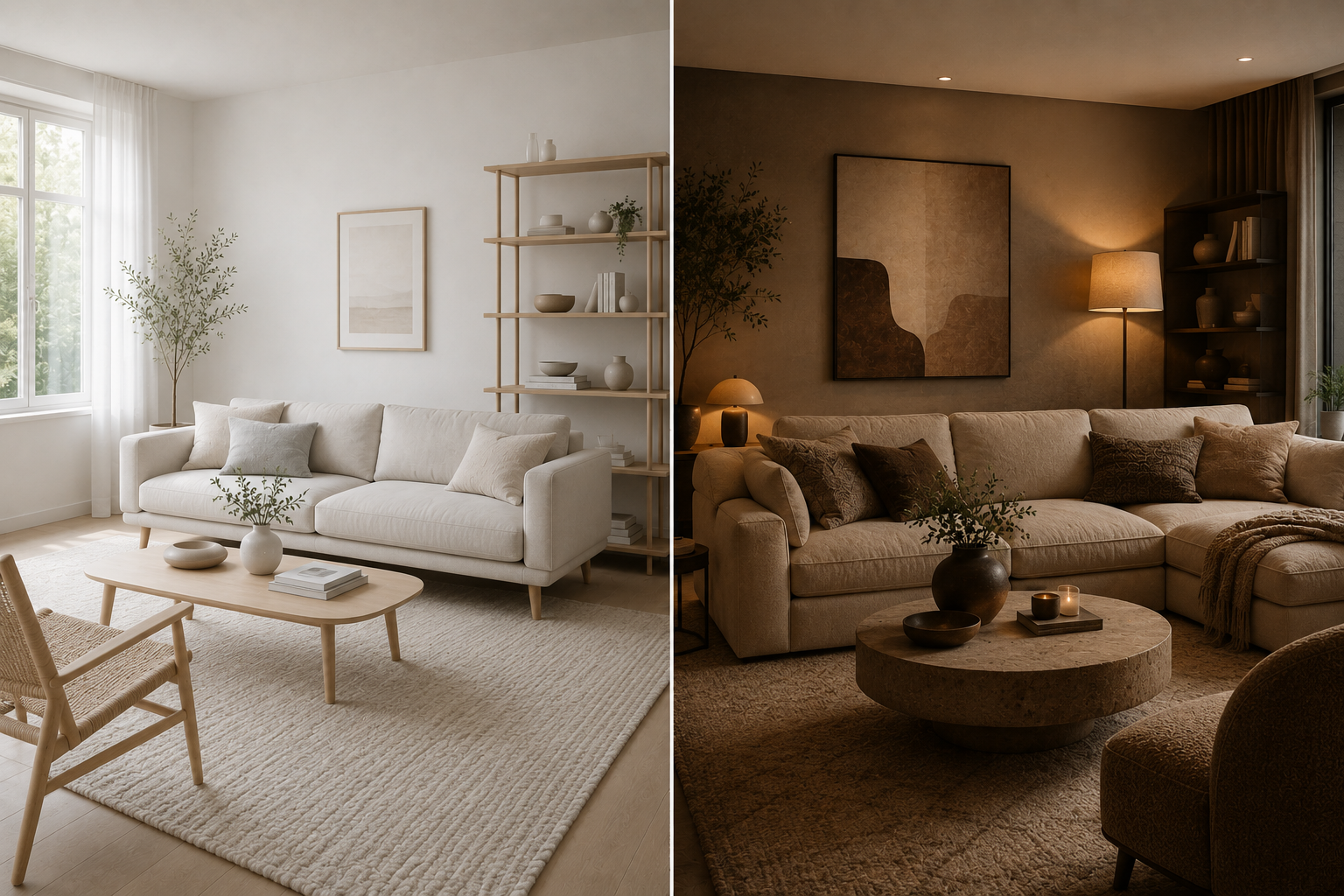
For a Scandi minimal living room, choose a slim sofa, pale wood coffee table, wool rug, and simple open shelving. For a warm modern version, choose a deeper sofa in cream or taupe, a stone or wood coffee table, textured cushions, and low-glow lamps.
Bedroom
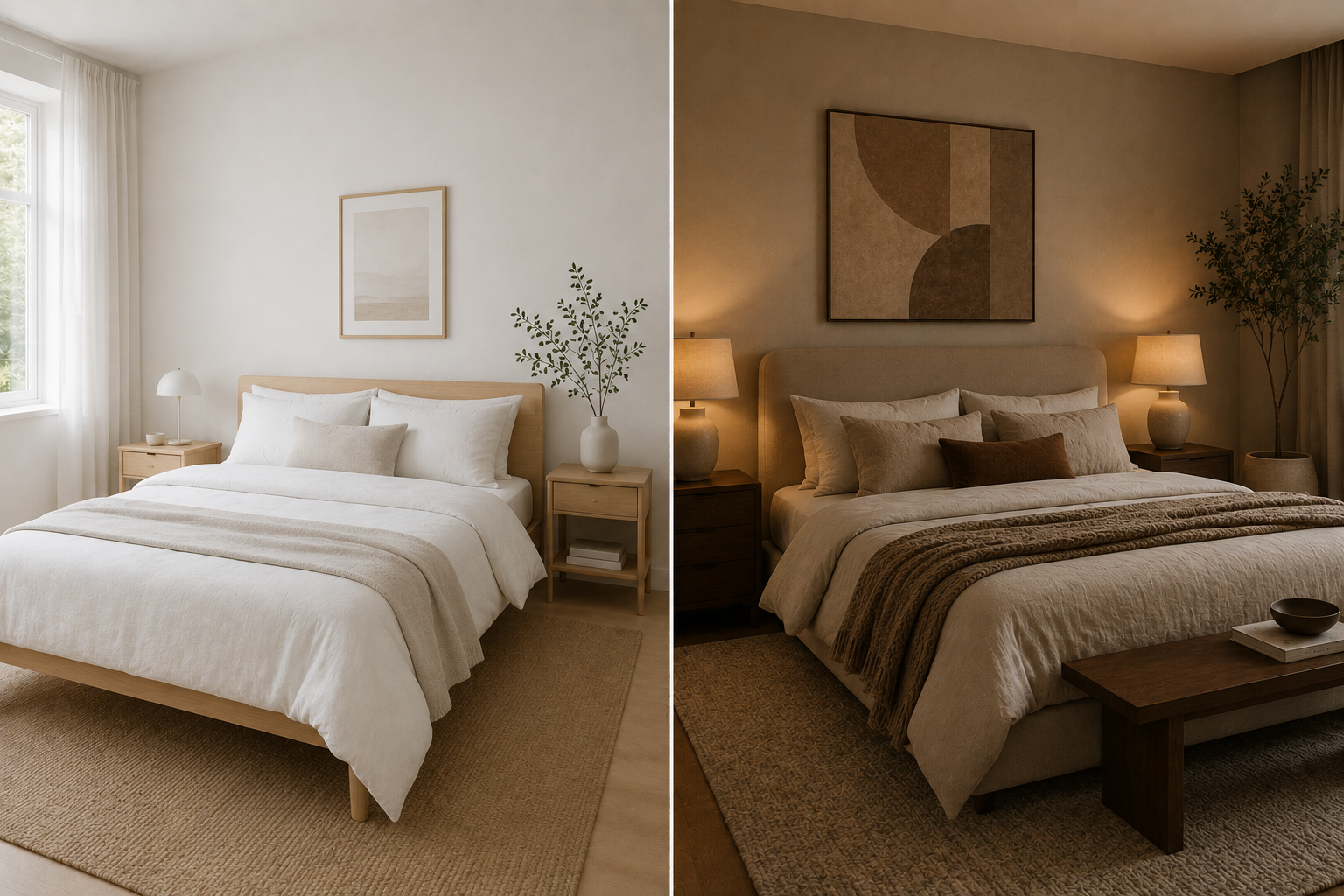
A Scandi minimal bedroom works well with white bedding, light wood side tables, linen curtains, and minimal wall art. A warm modern bedroom can include a padded headboard, layered bedding, warm beige walls, ceramic lamps, and darker wood accents.
Kitchen
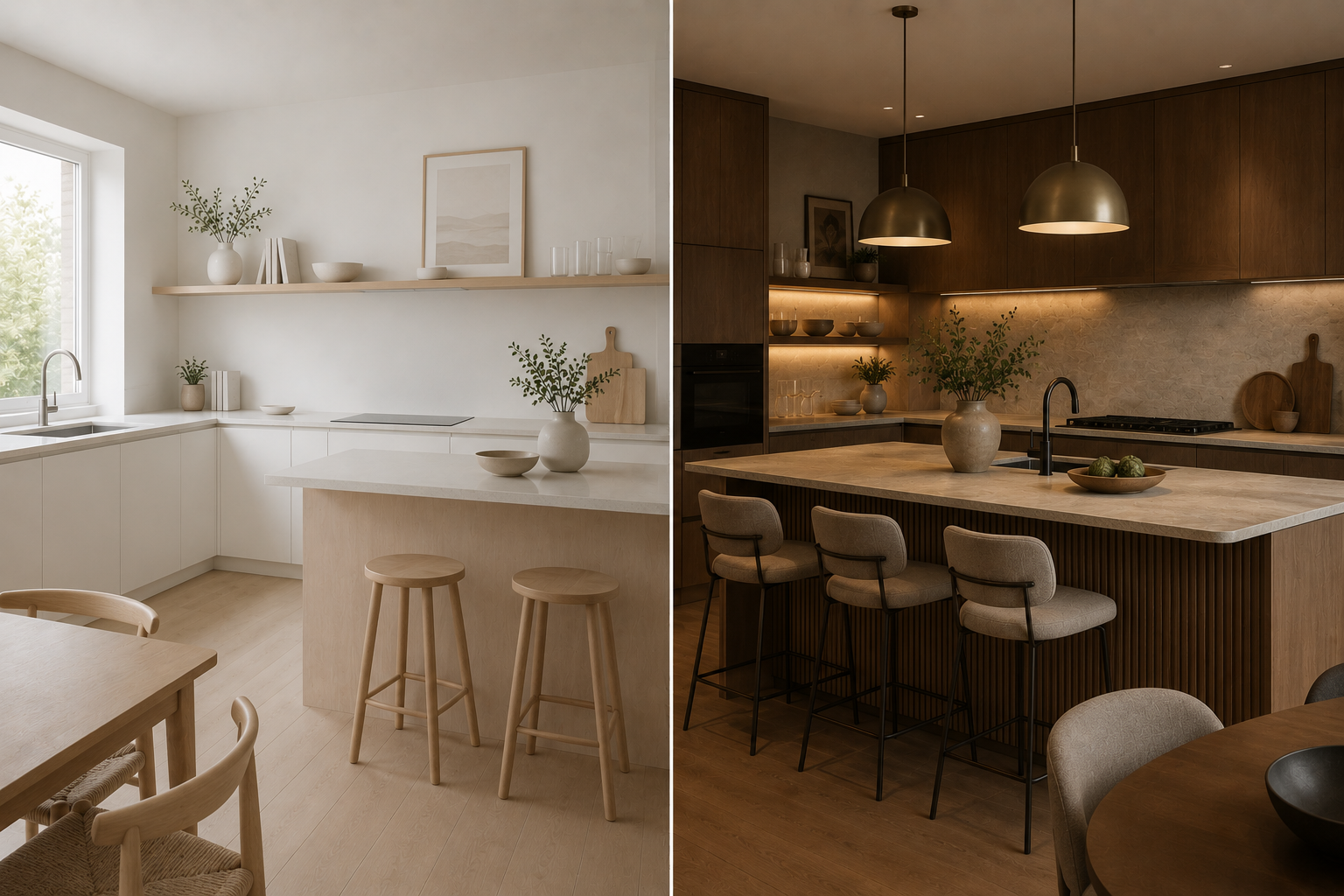
Scandi minimal kitchens often feature flat-front cabinetry, pale counters, light wood, and open surfaces. Warm modern kitchens bring in richer finishes: oak or walnut cabinetry, stone backsplashes, fluted details, brass or matte black hardware, and pendant lighting with a soft glow.
Quick Styling Formula
· For Scandi minimal: white base + pale wood + functional furniture + one soft accent colour + minimal decor.
· For warm modern: warm neutral base + richer wood + curved furniture + layered lighting + tactile decor.
· For a balanced blend: keep the layout simple, then add warmth through lighting, rugs, cushions, ceramics, and wood tones.
Final Takeaway
Scandi minimal and warm modern both prove that a home can be simple without feeling empty. The difference is emotional: Scandi minimal clears the room so you can breathe, while warm modern fills the room with quiet comfort. The clean, practical interiors I noticed in parts of Europe and the warmer, more textured spaces I came across in places like Brazil and Vietnam have made me feel that the best homes usually balance clarity with feeling. If you want brightness and restraint, go Scandi. If you want depth and softness, go warm modern. If you want the best of both, start minimal, and warm it up with texture, tone, memory, and meaningful details.
