Indian Blue Pottery vs. Turkish Ceramics: Two Blue Traditions, Two Cultural Stories
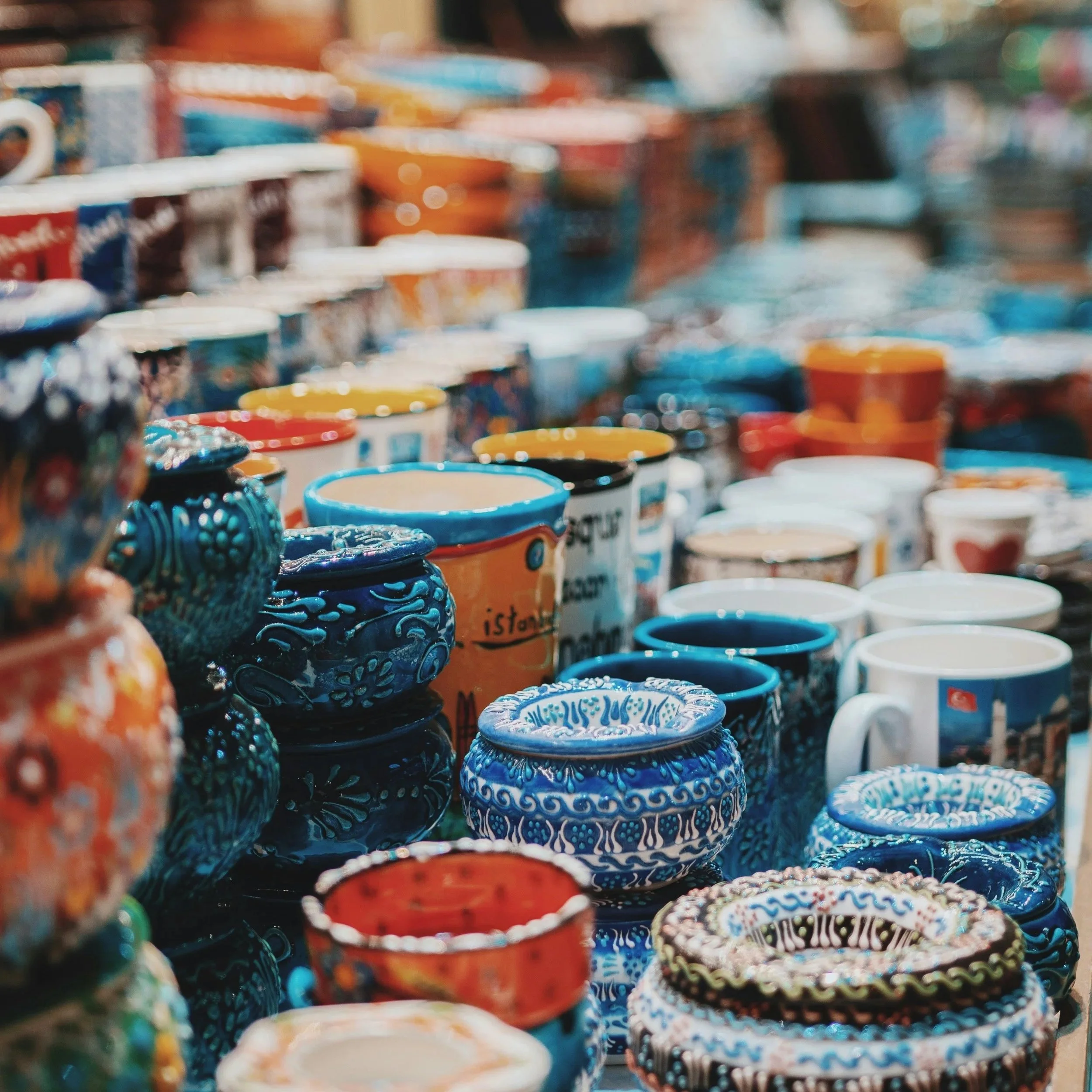
Blue-and-white ceramics have followed me across different journeys. I first started noticing them not just as decorative objects, but as cultural markers, whether in the blue tiles and pottery I saw in Amsterdam and Portugal, the bold ceramic traditions I encountered while travelling through Istanbul, or the familiar charm of Blue Pottery that I have seen in Rajasthan. These pieces may share a love for cobalt blue, floral patterns, and glossy surfaces, but each place gives the colour its own personality.
Two of the most recognisable traditions in this family are Indian Blue Pottery, especially the Jaipur tradition, and Turkish ceramics, most famously Iznik pottery. At first glance, they may look related, but look closer and each reveals a distinct identity shaped by its own materials, patrons, techniques, and cultural setting.
1. Origins: Shared Routes, Different Destinations
Indian Blue Pottery is closely associated with Jaipur in Rajasthan, although its visual language carries Central Asian, Persian, Turko-Persian, and Mughal influences. The craft became embedded in Jaipur’s identity through royal patronage, artisan training, and later revival efforts that helped transform it into one of Rajasthan’s best-known decorative crafts.
By contrast, when I have seen Blue Pottery in Rajasthan, especially in the context of Jaipur’s craft markets and home décor stores, it has felt more intimate and handmade. The objects invite touch: a bowl, a tile, a knob, a coaster, a vase. They carry a sense of local warmth and everyday beauty, rather than the grand architectural presence I associated with Istanbul’s ceramic surfaces.
Turkish ceramics, particularly Iznik pottery, developed in Anatolia under the Ottoman Empire. Produced mainly from the late 15th to the 17th century, Iznik ceramics became closely linked with Ottoman court taste and monumental architecture. Tiles and vessels from Iznik decorated mosques, tombs, palaces, and elite interiors, turning ceramics into a statement of imperial refinement.
When I travelled to Istanbul, what struck me most was how ceramics were not confined to shelves or souvenir shops; they appeared as part of the city’s visual rhythm. In mosques, markets, courtyards, and small shops, the blue tiles seemed to carry a sense of history and ceremony. The patterns felt more formal and architectural than the pottery I was used to seeing in India, almost as if every flower and curve had been designed to belong to a larger space.
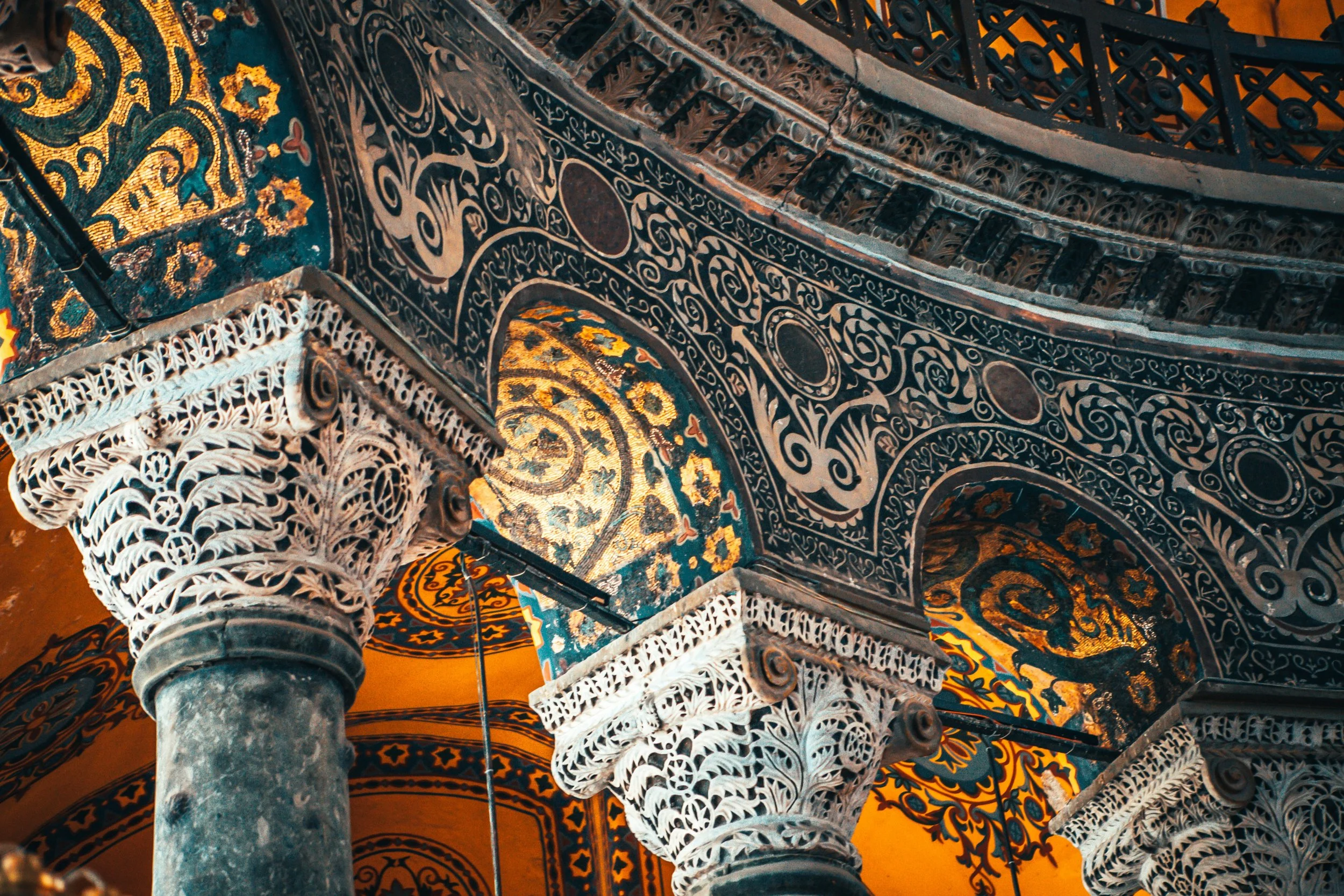
Turkish Iznik Architecture
2. Materials: Jaipur’s No-Clay Body vs. Iznik’s Fritware Base
One of the most surprising features of Jaipur Blue Pottery is that it is traditionally made without ordinary clay. Its body is created from a mixture that may include quartz stone powder, powdered glass, Multani mitti, borax, gum, and water. This gives the finished object a smooth, slightly glassy quality and a delicate, decorative character.
Iznik ceramics are also not conventional earthenware in the simplest sense. They are known for a quartz-rich fritware body, generally covered with a white slip and painted under a transparent glaze. This technical structure helped create the luminous surface, crisp outlines, and jewel-like colours that made Iznik pottery famous.
3. Colour Palette: Cobalt Calm and Ottoman Drama
Indian Blue Pottery is best known for cobalt blue on a white base, often joined by turquoise, green, yellow, and occasional earthy tones. The overall effect is bright, airy, and decorative, making it especially popular for home accents such as plates, bowls, tiles, knobs, coasters, and vases.
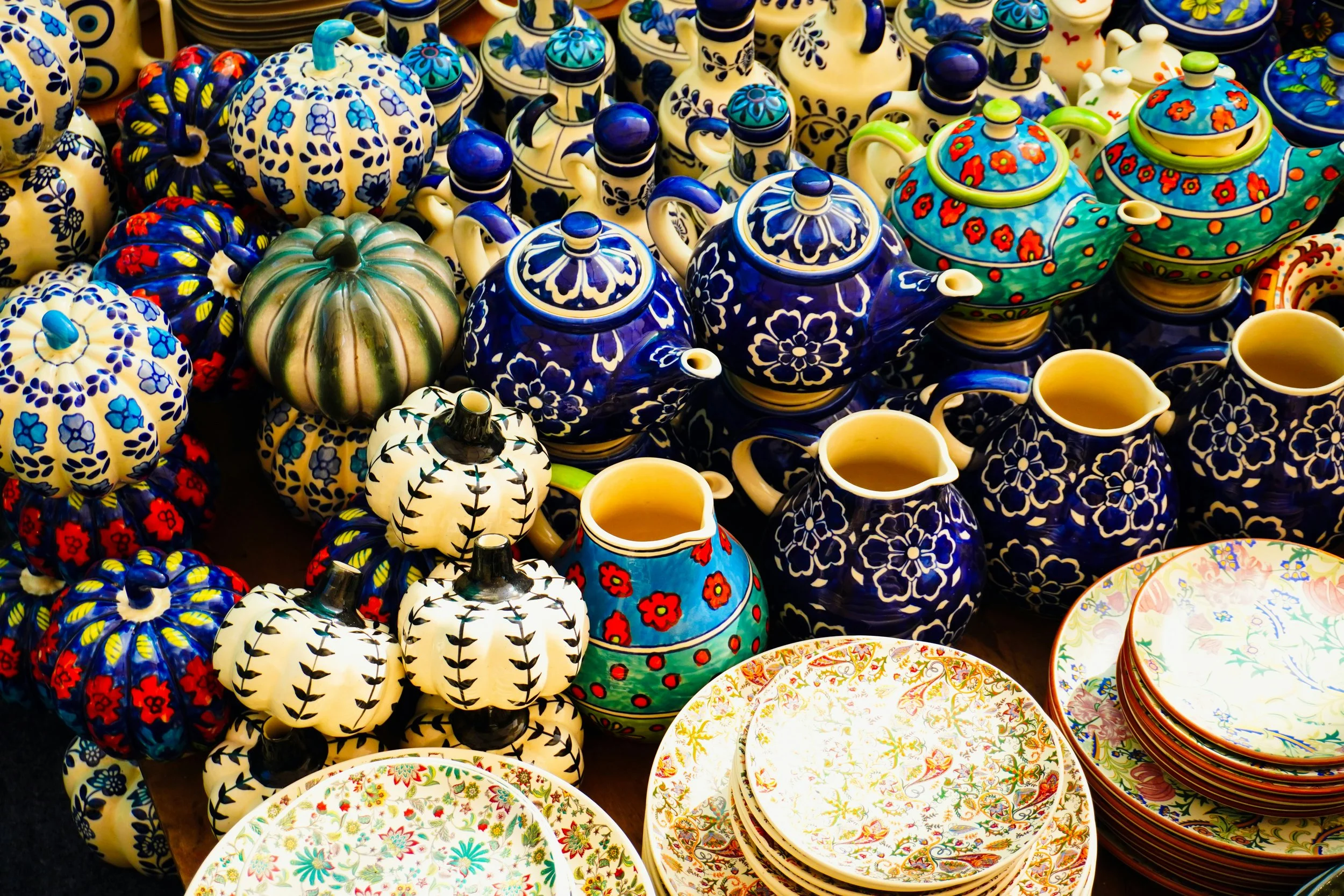
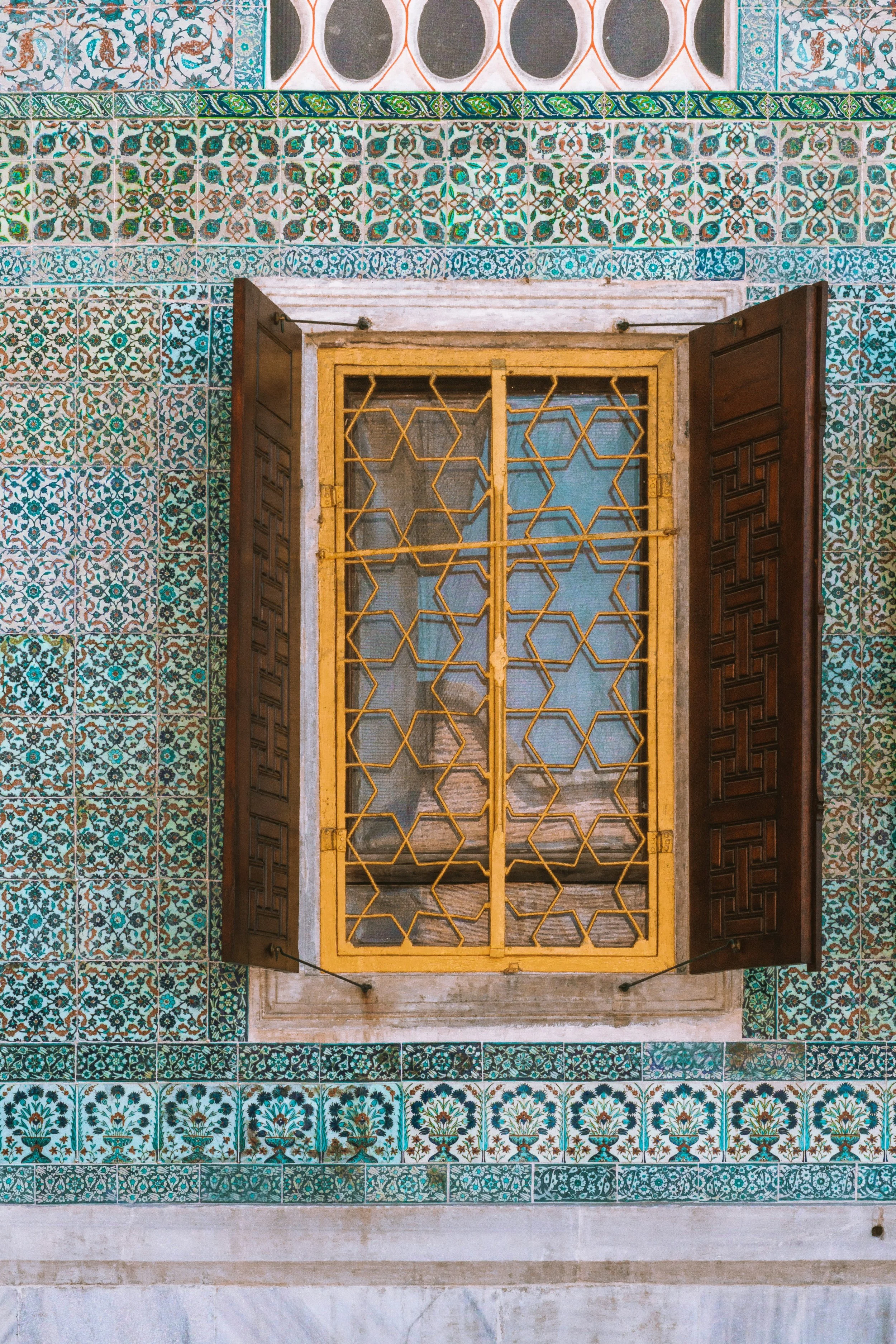
Turkish Iznik ceramics began with strong blue-and-white compositions and later expanded into turquoise, emerald green, black outlines, and the famous raised coral or bole red. This richer palette created a more dramatic visual rhythm, especially in architectural tile panels where repeated motifs could cover large walls with colour and movement.
4. Motifs: Nature in Two Visual Languages
Jaipur Blue Pottery often celebrates nature through birds, animals, flowers, leaves, and simplified geometric patterns. Peacocks, lotuses, vines, and stylised blooms are common, and the compositions usually feel charming, balanced, and approachable. The decorative style suits both traditional Indian interiors and contemporary homes looking for handcrafted colour.
Iznik motifs are more courtly and architectural in personality. Tulips, carnations, roses, hyacinths, saz leaves, palmettes, arabesques, and cloud-like forms appear in disciplined yet flowing arrangements. Many designs reflect Ottoman garden symbolism and manuscript aesthetics, producing a visual language that feels formal, elegant, and highly structured.
5. Technique and Finish: Delicate Decorative Craft vs. Architectural Brilliance
Jaipur Blue Pottery is moulded, dried, hand-painted, glazed, and low-fired. Because of the low firing temperature and no-clay composition, pieces can be more fragile than stoneware or porcelain. This is why many Jaipur Blue Pottery objects are used decoratively, although modern makers also produce functional tableware and home accessories.
Iznik ceramics are celebrated for underglaze painting, strong outlines, luminous glaze, and durable tile production. Their role in Ottoman architecture gave them a monumental quality. When used across mosque walls, palace rooms, and tomb interiors, individual ceramic tiles became part of a larger visual environment.
6. Cultural Meaning: Craft Identity and Imperial Memory
Indian Blue Pottery today is strongly tied to Jaipur’s craft economy, tourism, and handmade design culture. It represents local artisan skill, regional identity, and the continuity of a craft that has survived decline and revival. A blue pottery coaster or vase is not only a decorative object; it is also a piece of Jaipur’s living heritage.
Turkish ceramics carry the memory of Ottoman artistic power. Iznik tiles are inseparable from the grandeur of Ottoman architecture and the aesthetics of the imperial court. Even contemporary Turkish ceramics inspired by Iznik patterns often echo this legacy of refinement, symmetry, and sacred or ceremonial space.
7. Which One Should You Choose for Your Home?
Choose Indian Blue Pottery if you want pieces that feel fresh, artisanal, colourful, and easy to blend with Indian, bohemian, or contemporary interiors. It works beautifully as table accents, wall plates, planters, drawer knobs, and giftable craft objects.
Choose Turkish ceramics if you prefer bold patterning, historic grandeur, and a more formal decorative statement. Iznik-inspired tiles, plates, and bowls suit spaces that need a rich focal point, especially in kitchens, entryways, courtyards, and wall displays.
Conclusion: Cousins in Blue, Not Copies of Each Other
After seeing blue pottery traditions across Rajasthan, Istanbul, Amsterdam, and Portugal, I have come to think of blue ceramics as a shared visual language with many accents.
Indian Blue Pottery and Turkish ceramics belong to this wider world of blue-glazed traditions, but they are not interchangeable. Jaipur’s Blue Pottery feels intimate, decorative, and rooted in living craft practice, while Iznik ceramics carry the grandeur of Ottoman design and architectural imagination. One brings the warmth of the artisan’s hand; the other evokes the rhythm of palace walls and sacred spaces. Together, they show how one colour-blue-can tell many cultural stories.
