Earthy Elements: Designing a Grounded, Sophisticated Sanctuary
In modern interior design, luxury is no longer defined by high-shine surfaces or sterile perfection. Instead, the ultimate luxury is a sense of grounding. Bringing "earthy elements" into your home isn’t about leaning into chaotic rustic trends or cluttered bohemian spaces; it is about a curated, high-contrast approach to the natural world.
By pairing raw, organic textures with clean, minimalist lines, you can create a space that feels deeply personal, moody, and architectural. Here is how to thoughtfully introduce the natural world into a refined home.
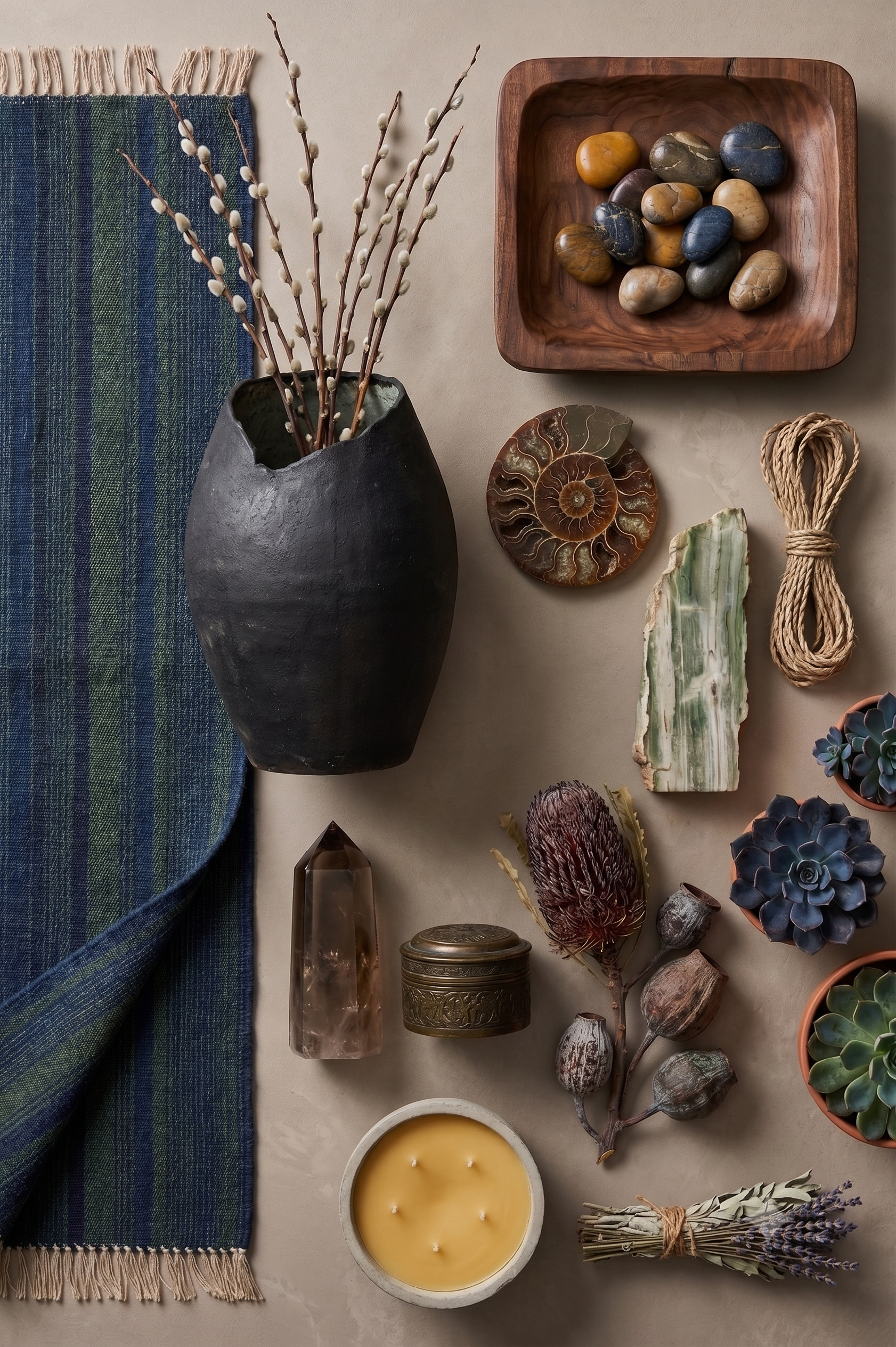
1. Embrace Sculptural Earth: Stones, Minerals, and Curiosities
Instead of standard mass-produced decor, look to the earth for pieces that double as fine art. A single, magnificent amethyst geode, a raw quartz cluster, or a striking fossil can serve as an incredible visual anchor on a cabinet or desk.
The key here is restraint. Avoid cluttering surfaces with tiny trinkets. Instead, select a few large, unique specimens that feature distinct structural traits, like horizontal line patterns or merged rock formations, and give them room to breathe.
2. The High-Contrast Earthy Palette
An earthy palette doesn't have to mean boring beige. To keep the space feeling sophisticated and mature, lean into deep, rich tones with high-contrast pairings:
The Bases: Warm charcoal, moody deep blues, and sun-baked terracotta.
The Accents: Rich ochre, forest green, and the occasional pop of natural brass or copper to catch the light.
By keeping your walls clean and your larger furniture pieces neutral, these deep, nature-inspired tones can be introduced through textiles, ceramics, and artwork without overwhelming the room.
3. The Play of Raw vs. Refined Textures
A sophisticated room relies heavily on tactile contrast. If every surface is perfectly smooth, the room feels flat. If everything is rough, it feels unpolished. Aim for a deliberate juxtaposition of materials:
Structured Leather: Use clean-lined, structured leather catch-alls or trays to add warmth and a tailored edge.
Organic Ceramics & Stoneware: Pair that structured leather with hand-carved wooden bowls, smooth river stones, or a rough, matte terracotta vase.
Artisanal Textiles: Layer in depth with a heavily textured, woven wall hanging or a chunky, deep-toned knit throw to soften the hard edges of architectural furniture.
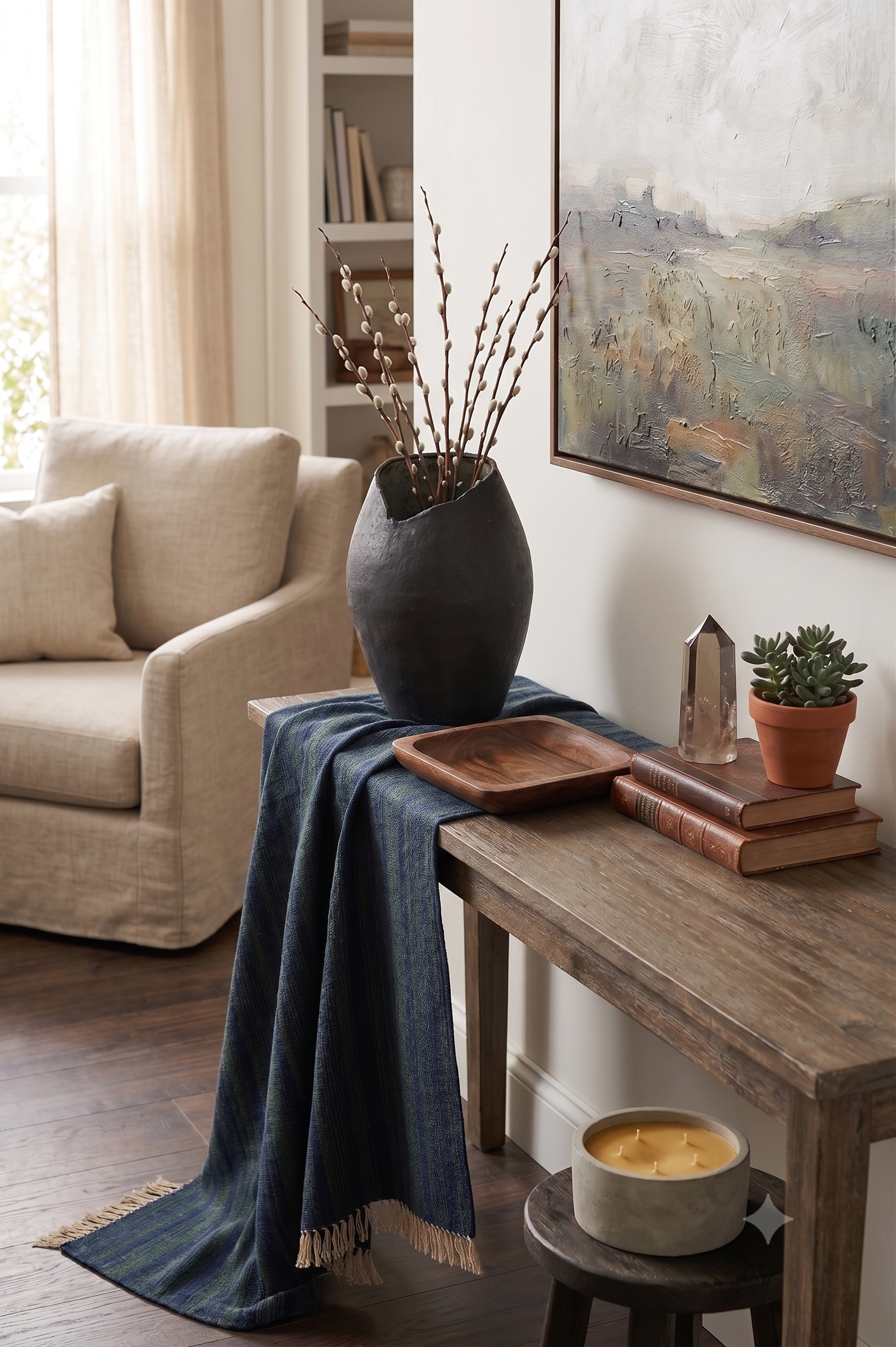
Styling the Edit
When pulling these elements together, remember the designer's rule of editing: elevate through subtraction. Group items in odd numbers (groups of three work beautifully), vary the heights, and ensure there is plenty of negative space around your vignettes. When natural elements are treated with reverence, they transform a house into a deeply grounding sanctuary.
Love these décor ideas? Don't forget one of the most important spaces in your home, the entrance. Read my blog, The Entryway Formula: How I Style a Minimalist, High-Impact First Impression, for practical tips and inspiration.
